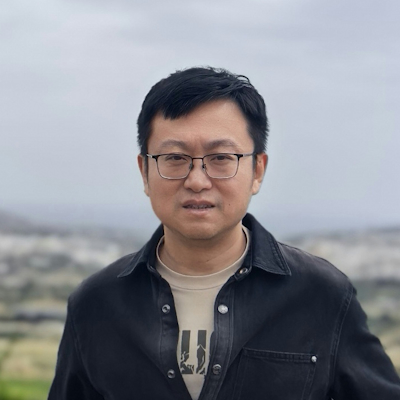

Peter Winzer is Vice President of Systems Architecture at Ciena. He helps drive Ciena’s strategy and innovation in AI interconnect architectures. Peter joined Ciena as part of the acquisition of Nubis Communications, the company he founded... [Resto da Bio]
Abstract: The performance of ever-growing AI clusters is severely limited by interface bandwidths, from memory access to scale-up, scale-out, and scale-across. This talk will explore the I/O needs in AI clusters and review challenges and solutions, from ultra-dense wide-and-parallel die-to-die interfaces to co-packaged copper and optical scale-up and scale-out sockets all the way to coherent scale-across systems.

Patrick Vandenameele
CEO at IMEC
Plenary Speaker
Talk: Integrated photonics: the key to sustainable semiconductor innovation
Patrick Vandenameele is EVP and CEO-elect (effective April 1, 2026) at imec, the globally recognized R&D center for nanoelectronics and digital technologies. As EVP and chief architect of imec’s research direction, Patrick has been responsible for shaping and driving the center’s innovation agenda, ensuring alignment between research initiatives, market needs, and partner priorities.
His appointment as CEO underpins?imec’s commitment to addressing market-driven application challenges while advancing its technology platforms. Patrick holds a PhD from KU Leuven and began his career at?imec?in 1996. In 2000, he transitioned to entrepreneurship, founding and leading several deep-tech ventures. He held senior positions at leading semiconductor companies, including Qorvo and Hisilicon/Huawei. His efforts resulted in 11 product launches and more than 100 million units shipped.
Returning to imec in 2017, Patrick played a key role in scaling the R&D center’s venturing activities, before stepping into his current leadership positions.
Abstract: Available soon...
Mark Thompson
Co-Founder and CTO at PsiQuantum
Plenary Speaker
Talk: Photonics for Quantum Computing
Prof. Mark Thompson is Co-Founder and Chief Technologist of PsiQuantum, where he leads the development of large-scale photonic quantum computing hardware. He has more than 25 years of experience in photonics and quantum technologies, spanning research, industrial innovation, and system-scale engineering. He received his PhD from the University of Cambridge and has held senior roles in both industry and academia, including positions at Toshiba, Corning, and Bookham Technology. He is Professor of Quantum Photonics at the University of Bristol and previously a Fellow of the University of Cambridge. Prof. Thompson founded the Bristol Centre for Quantum Engineering and the Bristol Quantum Technology Enterprise Centre, helping to establish the UK as a leader in quantum technologies. He has authored more than 200 publications and patents, received prestigious UK and European awards, and co-founded two quantum technology startups
Abstract: Powered by breakthroughs in integrated photonics and fault-tolerant quantum architecture, PsiQuantum is building the first industrial-scale quantum computer to solve problems beyond the reach of the world’s most powerful supercomputers. Our approach is based on photonic qubits, which offer significant advantages at the scale required to deliver fault-tolerant, general-purpose quantum computing.
In this talk, I will describe how our ultra-low-loss, high-performance photonic platform provides a path to scale. I will outline how we generate and detect photonic qubits, how we manipulate and route them using fast barium titanate (BTO) electro-optic switching networks, and how we enable module-to-module connectivity through photonic qubit interconnects. We are building photonic systems of an unprecedented scale—combining advanced chip technology, cryogenics, control electronics, and architecture into a manufacturable quantum computing platform.
Jiangwei Man
Director of Advanced Optoelectronics Laboratory at Huawei
Plenary Speaker
Talk: Scaling AI From Optical Innovation to Standard NPO and CPO Solutions
Dr. Jiangwei Man is Director of Advanced Optoelectronics Laboratory and Principal Researcher of Optoelectronics at Huawei. He leads the team that have pioneered a technological revolution in optical interconnects for data centers, with speeds spanning 25 to 400 Gbps per lane. He oversees the architectural and system design of the solution, defining critical design requirements for core components. He has also made outstanding contributions to IEEE, OIF, IPEC and other industry organizations—championing the development of international standards for short-reach interconnects, and actively participating in premier international conferences including ECOC and OFC to advance the collaborative evolution of cutting-edge industrial technologies. His team is dedicated to technical research and innovation across diverse optoelectronic fields and related application.
With over 20 years of expertise in optical communications, Dr. Man holds a PhD from the Institute of Semiconductors, Chinese Academy of Sciences and a Bachelor’s Degree in Physics from Nankai University
Abstract: With the explosive growth of artificial intelligence, traditional optical interconnect technologies for AI computing networks have become critical bottlenecks in terms of density and energy efficiency. This report focuses on the innovative architectures of NPO (Near-Packaged Optics) and CPO (Co-Packaged Optics), providing an in-depth analysis of their advantages in reducing power consumption and improving integration density. Through a systematic analysis of technological evolution, we demonstrate that standardized NPO/CPO represents the inevitable path to overcome current limitations and sustain the scalability of AI computing networks.
Our website uses technical cookies to ensure the proper functioning of the site and to provide an optimal user experience. These cookies are essential to enable navigation on the site and access secure areas. We do not collect any personal information through these cookies and they cannot be disabled as they are necessary for the operation of the site. By continuing to use our site, you accept the use of technical cookies.
Statistical Cookies
Our website uses statistical cookies to collect anonymous information about how visitors use our site. These cookies help us understand how users interact with the site, which pages they visit most frequently, and how they arrived at the site. The information collected through these cookies is used exclusively to analyze and improve the performance of the site, as well as to conduct market studies. We do not collect personally identifiable information through these cookies.
Used to send data to Google Analytics about the visitor's device and behavior. Tracks the visitor across devices and marketing channels.
Expiry: 2 Years | Type: HTTP
_ga_#
Used to send data to Google Analytics about the visitor's device and behavior. Tracks the visitor across devices and marketing channels.
Expiry: 2 Years | Type: HTTP
We use third-party cookies for the purpose of measuring and statistically analyzing users' utilization and navigation on the website. You can ALLOW ALL cookies to accept them all, ALLOW SELECTION to configure your preferences, or DECLINE to reject them. You can find more information in our Cookie Policy